
Practice Digital Strategy
What Makes a Great GP Practice Website in 2026
Beyond the Basics
Most GP practice websites do the bare minimum — a list of opening hours, a phone number, and a registration form buried three clicks deep. In 2026, patients expect more. A great practice website is not just a digital noticeboard; it is an extension of the care you provide.
Here is what separates an adequate website from one that genuinely serves your patients and your practice.
1. Patient-First Navigation
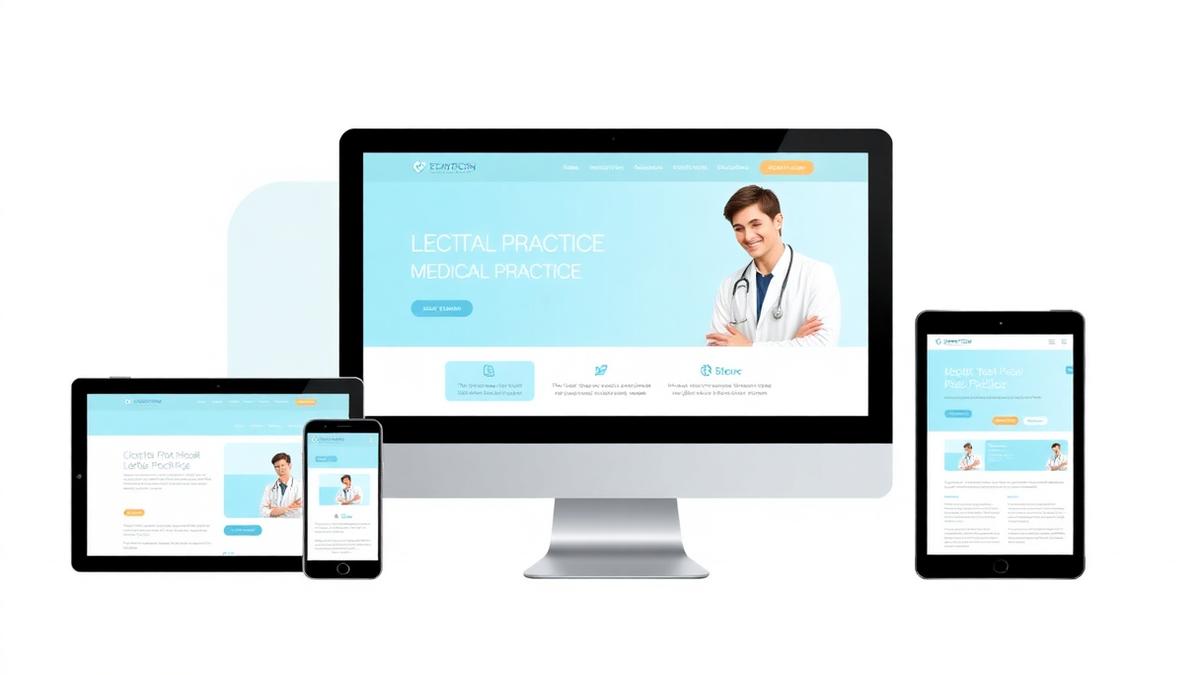
The number one frustration patients report with GP websites is not being able to find what they need. A great website puts the most common tasks front and centre:
- Book an appointment — one click from the homepage
- Order a repeat prescription — clearly signposted
- Contact the practice — phone, online form, and eConsult or similar
- Register as a new patient — downloadable or online form
Do not bury these behind dropdown menus or generic "Services" pages. They should be visible the moment the page loads.
2. Speed That Respects People's Time
NHS website visitors are often unwell, stressed, or in a hurry. A site that takes 5 seconds to load on mobile is not just annoying — it is a barrier to care.
Target benchmarks:
- First Contentful Paint under 1.5 seconds
- Largest Contentful Paint under 2.5 seconds
- Total page weight under 1MB
- No render-blocking third-party scripts
We build our sites to load in under 2 seconds on 4G connections. See how.
3. Genuine Accessibility
Accessibility is not a checkbox exercise. It means your website works for:
- Patients with visual impairments using screen readers
- Elderly patients who need larger text and clear contrast
- Patients with motor disabilities who navigate by keyboard
- Patients with cognitive disabilities who need simple, clear language
Meeting WCAG 2.2 AA is the legal minimum. A great website goes further with plain English, logical page structure, and tested screen reader compatibility.
Read our full WCAG 2.2 guide for NHS websites.
4. Content That Answers Questions
Patients search Google before they call the surgery. A great website anticipates those questions:
- "Can I get a same-day appointment at [practice name]?"
- "How do I register at a GP near [location]?"
- "What vaccinations does [practice] offer?"
Each of these is a page or FAQ entry that both helps patients and brings organic search traffic to your site.
5. Trust Signals
Patients need to trust your website before they trust it with their health information. Include:
- CQC rating badge with a link to your inspection report
- Named GPs with photos (if staff are comfortable)
- Patient testimonials or Friends and Family Test results
- NHS logo displayed correctly per identity guidelines
- HTTPS with a valid SSL certificate
6. Mobile-First Design
Over two-thirds of your visitors are on phones. Your website should be designed for mobile first, then adapted for desktop — not the other way around.
This means:
- Tap targets at least 44x44 pixels
- No horizontal scrolling
- Readable text without zooming
- Click-to-call phone numbers
7. Regular Updates
A website last updated in 2022 tells patients (and Google) that it is neglected. Keep it current with:
- Updated opening hours (especially bank holidays)
- Seasonal health campaigns
- Staff changes
- News and practice updates
We handle all content updates for our clients as part of our annual hosting package. View pricing.
The Simpliy Standard
Every website we build at Simpliy Primary Care is designed around these principles. We do not use templates — each site is built for your practice, your patients, and your priorities.
Get in touch to see what we can build for you.Need a hand?
Practice website that actually helps?
We design and host NHS-compliant websites for GP practices and PCNs — with UK support included.